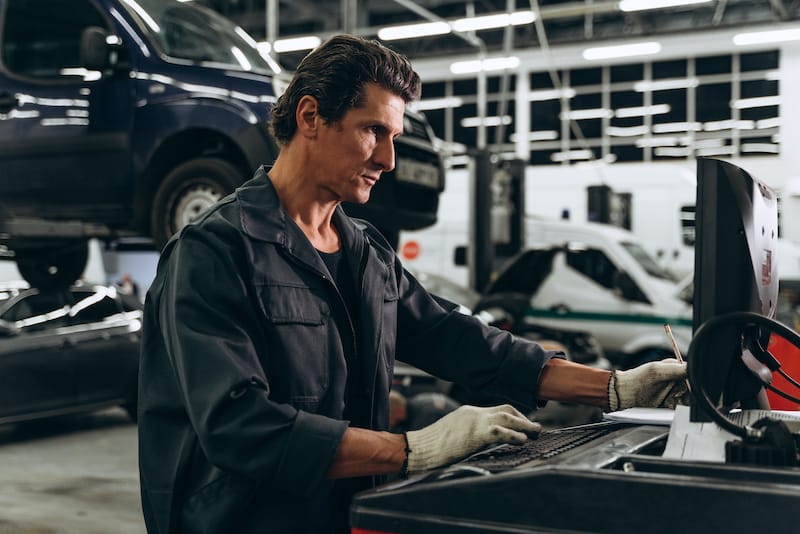
Tracking workshop mechanic performance effectively means using job card data, labour times, workload and productivity figures to understand how the workshop is operating. Instead of constantly monitoring technicians, managers can use performance data to identify bottlenecks, improve scheduling, compare sites fairly and provide targeted support while letting mechanics work independently. To improve workshop efficiency, choose TechMan.
Running a busy workshop means knowing whether jobs are being completed efficiently without constantly checking over your mechanics’ shoulders. Too much monitoring can quickly feel like micromanagement, while too little oversight can make it difficult to spot delays, inefficiencies or training needs.
The key is balancing team independence with enough information to understand how the workshop is performing.
Tracking workshop mechanic performance doesn’t have to mean watching every task or questioning every decision. By focusing on useful measures such as time spent on jobs, productivity, workload and quality of work, garage owners can build a clearer picture of performance while allowing mechanics to get on with their jobs.
Digital workshop performance tracking tools can make this easier by recording job progress and providing clear performance data without creating extra paperwork.
In this blog, we’ll explain how to check garage mechanic productivity fairly, support your team and improve workshop efficiency without unnecessary micromanagement.
A busy workshop can make it difficult to understand how individual mechanics are really performing. Mechanics may spend part of their day repairing vehicles, and the rest waiting for parts, customer approvals, information or available equipment.
As a result, just looking at how busy someone appears doesn’t give an accurate picture of productivity. It can also be difficult to compare mechanics fairly because jobs vary in complexity and some repairs naturally take longer than others.
Tracking workshop mechanic performance through actual job time, billed hours, completed work and delays provides a much clearer view. This lets workshop managers spot real issues while also recognising when workflow problems, rather than performance, cause lost time.
A well-maintained job card can give workshop managers useful information without constantly checking what each mechanic is doing. It can show which mechanic is assigned to a job, when work started, what work was completed and whether the vehicle is still waiting for parts, approval or another stage.
Digital job cards can also help track labour time, job status and completion rates. Workshop performance tracking tools like these make it easier to spot patterns, such as jobs regularly taking longer than expected or certain mechanics carrying too much work.
Instead of monitoring people throughout the day, managers can use this information to identify genuine issues, improve workloads and have more productive conversations with their team.
Small delays can quickly add up in a busy workshop. Mechanics may be waiting for parts, customer approval, diagnostic information or the next vehicle to become available. These gaps reduce the time available for productive, billable work.
Tracking job progress and mechanic work can help managers see where delays are happening and whether they’re caused by scheduling, parts or workflow issues.
The goal isn’t to push mechanics to work faster. Instead, the data can highlight problems that the whole workshop can fix. For example, if several jobs are regularly paused while waiting for parts, improving parts preparation could help keep mechanics working.
Spotting these bottlenecks early helps protect billable hours and keeps vehicles moving through the workshop efficiently.
Performance data works best when it helps mechanics succeed rather than making them feel constantly watched. Measures such as productivity, efficiency, billable hours and job times can highlight where a mechanic may need better support, training or a different type of work.
The figures should always be considered alongside the circumstances behind them. A mechanic may have lower productivity because they’re waiting for parts, dealing with a difficult diagnostic job or helping another worker. Reviewing patterns over time gives managers a fairer picture than reacting to one poor result.
Used this way, workshop data can support constructive conversations, recognise strong performance and identify practical improvements while giving mechanics the independence to get on with their work.
For garages with multiple sites, comparing performance can show which locations are working efficiently and where improvements may be needed.
Useful measures include mechanic productivity, job efficiency, labour sales, workload and time taken to complete jobs. The important point is to compare like-for-like data, as different locations may handle different types or volumes of work.
TechMan’s multi-site system provides an overview of locations and staff while allowing managers to drill down into individual site data. This makes tracking workshop mechanic performance easier for owners without requiring regular visits to every site.
Instead of using the figures to rank or pressure teams, managers can use them to identify successful processes, understand differences between sites and share practical improvements across the business.
Workshop data can make scheduling more accurate because it shows how much work the team can realistically handle. Managers can use information such as technician availability, job progress, estimated labour time and current workloads when planning the day. This helps avoid giving too much work to one mechanic while others have capacity.
TechMan combines job scheduling with workshop performance information, helping garages organise bookings and keep track of jobs as they move through the workshop. Instead of relying on guesswork, managers can use previous job data to identify common delays and plan more realistic schedules.
This can help reduce idle time, prevent overloaded mechanics and keep vehicles moving through the garage efficiently.
Tracking workshop mechanic performance doesn’t mean watching every task or constantly checking on your team. The right workshop data can give managers a clear view of productivity, job progress, bottlenecks and workload without disrupting the people doing the work.
When this information is used fairly, it can support better scheduling, identify areas for improvement and help technicians get the support they need.
For busy and growing garages, having this information in one place makes performance management much easier. TechMan helps workshops manage job cards, scheduling and performance data digitally, giving managers greater visibility without unnecessary supervision.
With TechMan’s advanced features like accounting, customer management, personnel management, stock control and reporting, you can better manage your garage operations and keep everything running smoothly.
Click here to learn more about our services or contact us to request a demo now.
Explore TechMan in real-time in a working garage and see how our extensive integrations can simplify your operations and save hours of time every day.


