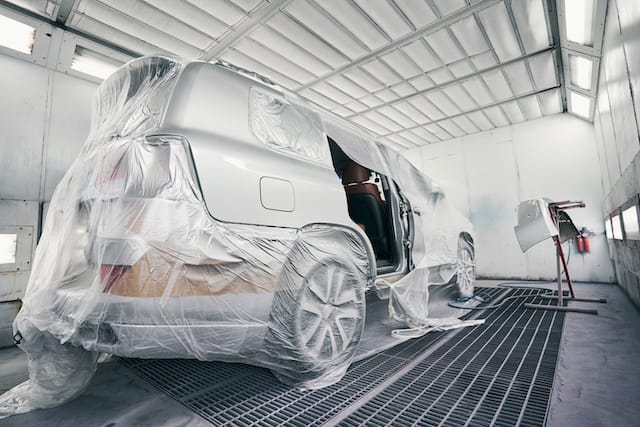
EV paint repairs introduce higher operational complexity and cost due to battery heat sensitivity, controlled curing requirements, specialised equipment and mandatory ADAS recalibration. These factors increase labour time, safety risks and compliance demands. Garages need to adopt structured systems to manage workflows and track requirements. To maintain your garage’s efficiency as electric vehicle repair volumes continue to grow, choose TechMan.
Electric vehicles are becoming increasingly common on UK roads, but for garages, EV paint repairs come with hidden operational and financial challenges.
Unlike traditional vehicles, EVs require specialised materials and strict safety procedures. Careful handling is essential due to EV battery heat sensitivity and the presence of advanced driver-assistance systems (ADAS).
Without the right systems in place, even routine paintwork can introduce unexpected risks, from managing EV paint-curing temperatures to completing post-repair recalibration checks.
These additional requirements often lead to higher training costs, longer repair times and more complex workflows, putting pressure on garage teams and reducing their overall efficiency.
In this blog, we’ll discuss the risks and hidden costs of EV paint repair for garages. We’ll also explain how GMS helps streamline workflows, improve safety, manage compliance and keep repair operations profitable as the industry moves toward an electric future.
EV paint repairs are more complex because electric vehicles are built differently from traditional petrol or diesel cars. The presence of lithium-ion batteries and high-voltage electrical systems introduces new risks for EV paint repair, especially when heat is involved.
Standard paint booths often operate above 50°C, which can damage EV batteries and shorten their lifespan, or even cause a fire if proper precautions aren’t followed. EVs require specialised materials, a lower paint-curing temperature, and careful handling of sensitive components.
Garages also need to follow strict manufacturer guidelines and safety procedures, which makes EV paint repairs more technical, time-consuming and resource-intensive than traditional vehicle repairs.
EV paint repairs often bring hidden operational costs that many garages aren’t fully prepared for. Specialised equipment, low-temperature paint systems, and safety upgrades for electric vehicle paint booths are needed to protect sensitive batteries and high-voltage components.
Garages also need to invest in technician training, follow strict manufacturer guidelines, and use tools like infrared curing for EVs to reduce heat exposure during repairs. These additional requirements increase labour time and raise compliance costs.
Without proper systems to track jobs, training, and safety checks, garage workflows may slow down, and operating expenses may rise, reducing profitability.
One of the biggest challenges in EV paint repairs is managing EV battery heat sensitivity during the curing process.
Traditional paint booths often reach temperatures above 50-60°C, which can damage lithium-ion batteries or even create fire risks if manufacturer limits are exceeded. Because of this, garages need to carefully control EV paint curing temperature and follow strict OEM guidelines for bake time and heat exposure.
Many workshops now use infrared curing for EVs, which focuses heat only on the painted panel instead of the entire vehicle. This reduces risk to the battery and electrical systems while maintaining paint quality and safety.
ADAS recalibration is a critical part of EV paint and body repairs because cameras, sensors and radar systems need to work exactly as designed after any repair. Even small jobs like bumper removal, windscreen replacement or paintwork can affect sensor alignment.
This makes recalibration necessary to ensure safety features such as lane assist and emergency braking function properly. It also adds extra steps to the repair process, including documentation, compliance checks, and coordination with technicians.
Garages need to track calibration requirements and follow manufacturer guidelines. By carefully managing workflows, they can avoid EV paint repair risks and legal liabilities.
TechMan’s GMS can help garages manage the growing complexity of EV paint repairs by bringing all tasks into a single, organised system. From job scheduling and technician tracking to digital job cards and integrated technical data, the platform gives garages full visibility over repairs, costs, and compliance requirements.
This makes it easier to manage EV paint repair risks and monitor training needs, ensuring safe, efficient workflows. With automated bookings, reporting tools and real-time repair data, garages can reduce delays and maintain profitability while handling EV-specific requirements.
As EV demand grows, investing in GMS can help workshops stay compliant and ready for the future of vehicle repairs.
Now that you understand the risks of EV paint repair for garages, do you need a GMS to improve your workflow?
With advanced features like accounting, customer management, personnel management, stock control, and reporting, you can better manage your garage operations and ensure everything runs smoothly and safely.
With our garage management system, you can keep your garage in great condition while enhancing customer and employee satisfaction.
Click here to learn more about our services or contact us to request a demo now.
Explore TechMan in real-time in a working garage and see how our extensive integrations can simplify your operations and save hours of time every day.


